Transport Manager control
- Confirm the travelling height of the actual vehicle, trailer, load and equipment.
- Make sure the correct maximum height is displayed in the cab before departure.
- Plan a route suitable for that height and brief the driver on restrictions and alternatives.
- Treat a warning, near miss or bridge strike as a systems event, not only a driver conversation.
Low-bridge signs communicate either a legal prohibition or a warning about maximum safe headroom. The difference changes the immediate instruction, but neither should be treated as a target clearance for an uncertain vehicle height.
Official low-bridge signs
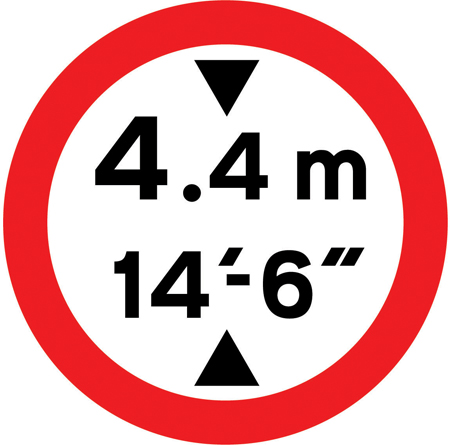
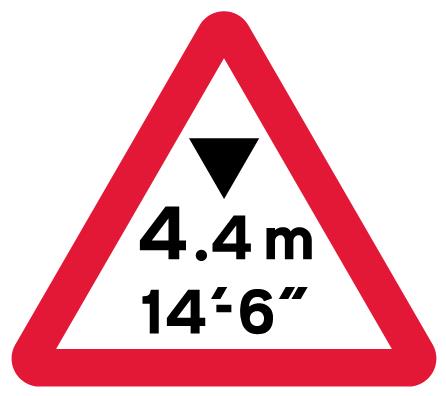
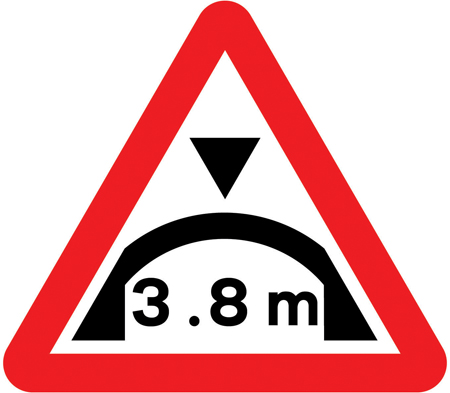
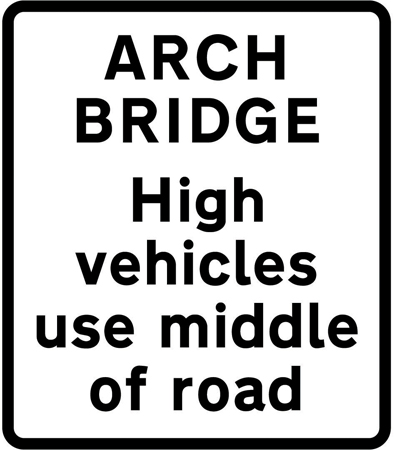
Images are official Department for Transport reproduction artwork. © Crown copyright, reproduced under the Open Government Licence v3.0.
Roundel or triangle: the practical distinction
A red-ring roundel gives an order. Department for Transport guidance says that at non-arch bridges it is unlawful for an overheight vehicle to pass a mandatory sign. A red warning triangle identifies the maximum headroom at a bridge or overhead obstruction.
At an arch bridge, chord markings and road markings identify the part of the opening where the signed headroom is available. Vehicle width and road position therefore matter as well as height. Do not assume that the full signed height is available across the entire carriageway.
Vehicle and journey information to confirm
- tractor unit, trailer and coupling configuration
- height of the cab, trailer, load and raised or mounted equipment
- the correct maximum travelling height shown on the cab notice
- route restrictions, temporary works and signed diversions
- changes after loading, unloading, reloading or adjusting equipment
Official bridge-strike guidance states that a vehicle with an overall travelling height over 3 metres must display the correct maximum height in the cab where the driver can easily read it. A stored headboard figure or a height remembered from another trailer is not a substitute for checking the combination being dispatched.
Route-planning controls
Record the height used for planning and the route issued to the driver. Use mapping or navigation suitable for large goods vehicles and check the source and update date of restriction data. The driver must still obey signs and respond to temporary restrictions or a changed route.
Where a destination, diversion or collection point creates uncertainty, stop the dispatch process long enough to confirm the route with the relevant road authority or another reliable primary source. The record should show the decision, not only that a sat-nav was used.
When a high-vehicle detector activates
Department for Transport guidance explains that some at-risk bridges use a variable message sign activated by an infra-red beam. If the warning activates, the driver should not continue towards the bridge. The Transport Manager should help the driver reach a safe lawful stopping point and confirm an alternative route.
After a near miss or bridge strike
Preserve the route plan, driver briefing, cab-height record, vehicle and trailer details, load information, navigation data, messages and photographs. Establish whether the height was measured correctly, whether the in-cab notice was updated, how the route was chosen and whether earlier checks should have detected the risk.
Corrective action may involve measuring equipment, trailer or load procedures, route approval, driver induction, agency-driver controls or supervision. Set a review date and sample later journeys to confirm that the revised control is being used.