Transport Manager control
- Keep plated, actual and axle-weight information distinct in route and load checks.
- Record why a route is suitable for the dispatched vehicle and journey.
- Require drivers to report the complete sign and supplementary plate before relying on an exemption.
- Investigate repeated conflicts as a planning or information-control issue.
Weight-restriction signs can apply to a class of goods vehicle or to all vehicles above the weight displayed. That difference, and the wording of any supplementary plate, determines whether the planned journey may continue.
Official weight-restriction signs
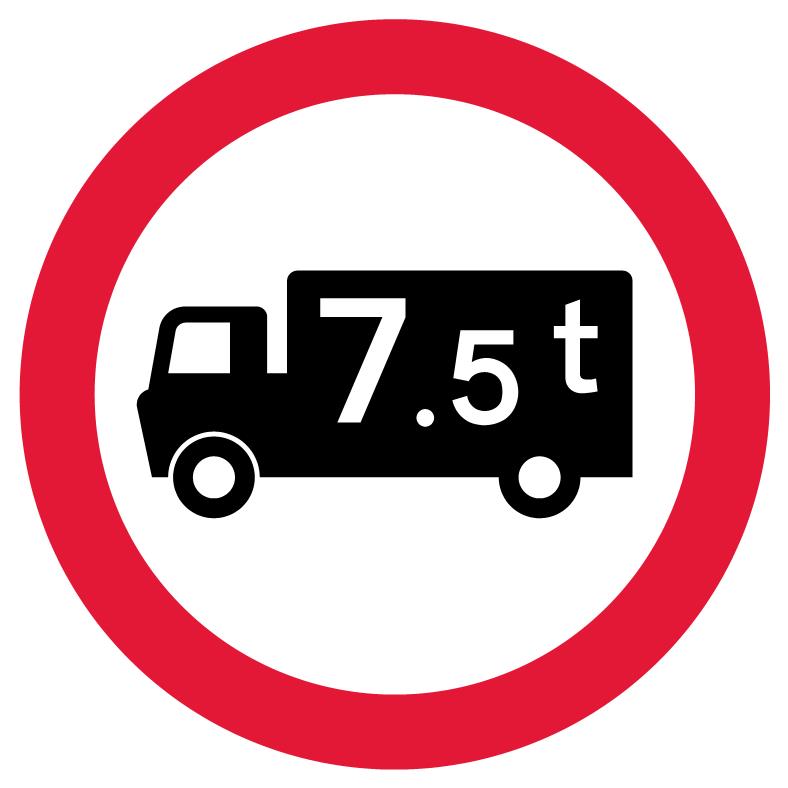
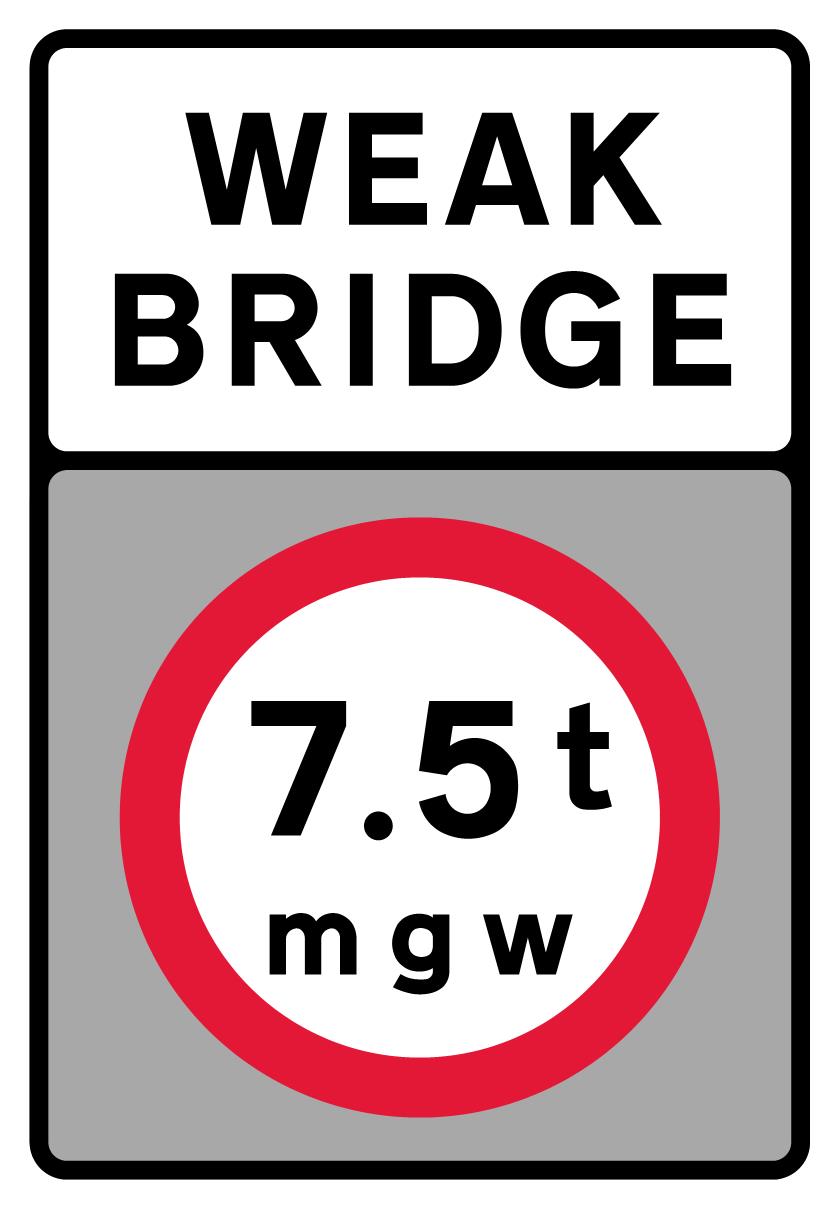
Images are official Department for Transport reproduction artwork. © Crown copyright, reproduced under the Open Government Licence v3.0.
Goods vehicle restriction: what the figure means
The Department for Transport describes the goods vehicle roundel as prohibiting goods vehicles over the maximum gross weight shown. Maximum gross weight is the maximum permitted total weight of the vehicle and its load, not simply its actual weight on that journey.
This distinction must be clear in route-planning instructions. Dispatching an empty or lightly loaded vehicle does not by itself remove the restriction. Where an access, loading or other exemption is signed, retain the exact wording and the evidence that the journey meets it.
Structural and weak-bridge restrictions
A red-ring weight roundel without the goods vehicle symbol prohibits vehicles over the maximum gross weight displayed. A supplementary plate may qualify that prohibition, including where its wording exempts empty vehicles. The plate must be read with the roundel rather than treated as a general local exemption.
Route data and vehicle navigation can support planning, but the driver must respond to the signs encountered. The escalation procedure should tell the driver what details to report and require a confirmed alternative before movement continues.
Information to hold before dispatch
- vehicle registration, trailer identity and operating configuration
- plated gross vehicle, train and axle limits as relevant
- actual load information and its distribution
- the route, known restrictions and suitable alternatives
- the basis for any signed access, loading or empty-vehicle exception
A road restriction and the vehicle’s own authorised weights are separate controls. Being below the figure on a road sign does not demonstrate compliance with the plate, axle limits or loading requirements.
Driver report and immediate response
Ask the driver for the sign symbol, weight displayed, every line of supplementary wording, road, direction of travel, nearby junction and a photograph where it is safe and lawful to obtain one. The vehicle should not pass the sign while applicability remains uncertain.
Confirm an alternative route suitable for the complete combination. Preserve the message or call note, route decision and evidence used, particularly where the planned route proved unsuitable.
Reviewing a route-planning failure
Check which vehicle data the planner used, whether the weight and configuration were current, how restriction data was checked, whether a last-minute change was communicated and whether the driver’s report received a timely response. Corrective action should address the failed control and include a later sample to confirm that it is working.