Transport Manager control
- Maintain a current plate and plating certificate for each relevant vehicle and trailer.
- Connect loading and allocation controls to gross, train and individual axle limits.
- Check that notifiable alterations have reached the vehicle record and displayed documents.
- Treat a mismatch as a record-control issue requiring resolution before use.
A ministry plate is not a payload label. It identifies the vehicle or trailer and records several limits and conditions that must be read in the context of the actual combination and load.
Official DVSA example
Document locations and references
Information to verify
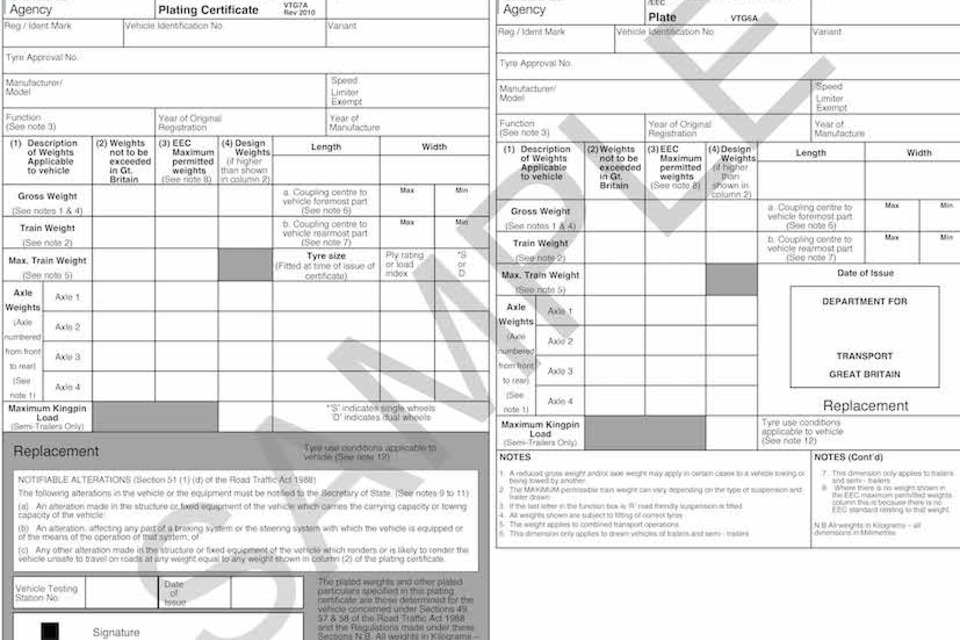
DVSA lists the serial number, DTp reference, registration, VIN, manufacturer, model, vehicle function, first registration, manufacture year, gross weight, train weight, maximum train weight, dimensions, axle weights and tyre-use conditions among the details shown. The plating certificate also shows tyre size and ply rating or load index.
Use the registration or trailer identity and VIN to make sure that the document belongs to the equipment being allocated. Then identify which figures apply to the planned configuration. Keep gross, train and axle limits distinct in loading sheets and driver instructions.
Permitted and actual weight are different controls
GOV.UK defines maximum authorised mass as the permitted weight of a vehicle or trailer including its maximum load. Gross train weight covers the tractor unit, trailer and load. Neither figure states the actual operating weight.
An allocation can be within gross vehicle and train limits yet still require checking for axle distribution, component limits or another applicable condition. Use suitable loading information and weighing controls rather than treating subtraction between two plate figures as a complete loading decision.
Notifiable alterations and record changes
DVSA identifies changes to the chassis, tyres, brakes or weight carried as examples that can require an updated plate and plating certificate. Up-plating, uprating, down-plating and downrating have different meanings. The fleet record, planning data and physical documents must agree after a change.
Exception workflow
If a plate is missing, unreadable or inconsistent, hold the allocation while the identity and current DVSA record are confirmed. Record the issue, replacement or correction request, documents obtained and the check made before release. GOV.UK provides routes for correcting mistakes and replacing lost or damaged documents.