Operator licence compliance is demonstrated through systems, decisions and evidence over time. A policy can explain the intended process, but the working records show whether the process is being used, reviewed and corrected when something goes wrong.
Software can make that evidence easier to maintain when it links the original record, the transport manager’s review, the action raised and the proof of completion. It is less useful when it becomes a digital filing cabinet with no clear connection between those stages.
Start with the operator’s actual commitments
There is no single checklist that replaces the operator’s licence, undertakings, vehicle types, work, operating centres and maintenance arrangements. The compliance system should reflect what has actually been promised and how the business operates.
The Senior Traffic Commissioner’s Statutory Document No. 3 explains the approach to transport managers and professional competence. The DVSA Guide to Maintaining Roadworthiness provides the working benchmark for vehicle maintenance systems. Drivers’ hours, tachographs and other specialist work require their own current sources and procedures.
Software should help apply those requirements. It should not present a generic score as a legal conclusion.
The five parts of a useful evidence trail
1. The source record
This is the item being controlled: a vehicle, driver, safety inspection, defect, document, infringement, training record or operator review. It should identify the operator and date, and retain the relevant supporting material.
2. The review
A competent person needs to assess the record. The review may confirm that no action is required, identify a gap or recognise a trend. Recording only exceptions can leave no evidence that routine information was considered.
3. The decision
The record should show what was decided and why. This is especially important where a vehicle is taken out of service, a check frequency is changed, a maintenance issue is escalated or a driver needs additional instruction.
4. The action
An action needs an owner, priority and due date. It should stay linked to the record that caused it. A note in meeting minutes is easy to lose if it never enters the working queue.
5. Completion evidence
Closing a task should not erase its context. Keep the repair evidence, updated document, training acknowledgement, communication or other proof that supports closure, together with the time and person responsible.
What to record across the operation
Vehicles and roadworthiness
- vehicle identity and operator scope;
- safety inspection frequency and dates;
- MOT and relevant specialist dates;
- first-use checks where required;
- brake performance evidence;
- maintenance provider records;
- defects, rectification and return-to-service decisions.
Drivers
- driving licence and entitlement checks;
- Driver CPC position;
- tachograph and drivers’ hours review;
- infringement discussion and follow-up;
- training, declarations and acknowledgements;
- risk-based changes to check frequency.
Management and oversight
- monthly or periodic compliance reviews;
- actions and escalation;
- operator communications and decisions;
- policy versions and issue records;
- transport manager activity and time;
- CPD and current knowledge evidence;
- reports presented to directors or responsible people.
Why monthly reviews matter
A structured review brings separate records into a management view. It can test whether inspections were completed on time, defects were closed correctly, driver checks are current, infringement trends have been addressed and previous actions are actually finished.
The review should not become a repeated statement that everything is satisfactory. It should identify the sample considered, record exceptions, assign follow-up and revisit earlier actions. Where no action is needed, a concise record of that conclusion still helps show oversight.
ETM Desk creates an operator-specific review and turns follow-up items into actions so they remain visible after the meeting.
Use calendars for dates, not for the whole evidence trail
A compliance calendar is valuable for inspections, MOTs, checks, document expiries and tasks. It should point back to the underlying record. A calendar entry by itself rarely explains what happened, what was reviewed or why an item was closed.
Where possible, dates should be generated from source records. If a safety inspection date changes, the reminder should update rather than leaving two conflicting versions in separate calendars.
What an audit-ready system looks like
Audit readiness does not mean creating a large PDF at the last minute. It means another competent person can follow the records during normal operation.
A useful test is to select one vehicle and one driver, then follow the chain:
- Identify the current record and required checks.
- See the latest inspection, check or review.
- Find any defect, exception or concern.
- Open the action raised from it.
- Review the supporting completion evidence.
- Confirm the management review considered the outcome.
The DVSA earned recognition HGV audit standards apply to that scheme, but their emphasis on documented processes, representative sampling, monitoring and subsequent action is a useful illustration of what evidence-led control looks like.
How ETM’s Repute Score should be understood
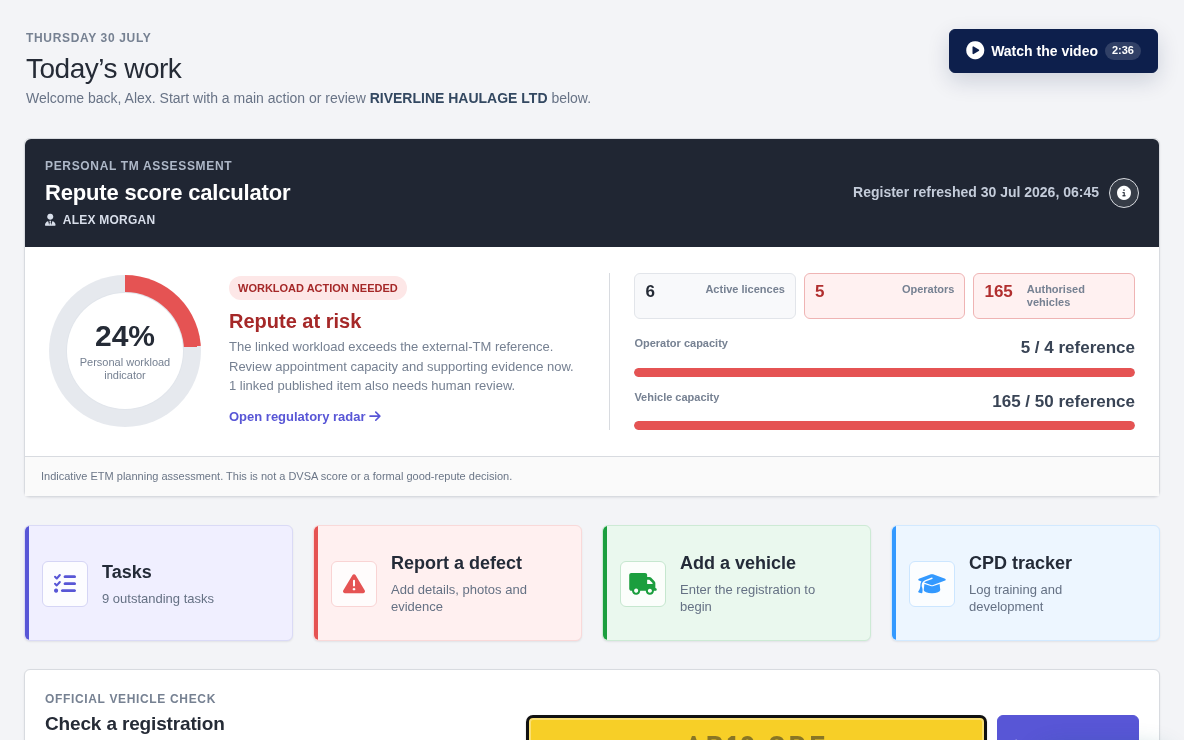
ETM’s custom Repute Score is an indicative planning assessment for the transport manager. It uses official register information held by ETM alongside recorded workload and evidence signals to highlight where attention may be needed.
It is not OCRS, not a DVSA assessment, not a formal good-repute decision and not a prediction of regulatory action. The screen explains the inputs so the transport manager can review the position rather than accepting an unexplained number.
Atlas and human review
Atlas can help a transport manager ask what is urgent, summarise the records for the operator being viewed, draft a policy or update, and propose a task or calendar reminder. The transport manager must review and confirm anything it prepares.
That boundary is important. Compliance software can organise information and reduce administrative work, but responsibility and professional judgement remain human.
Build the system in a sensible order
- Confirm operators, licences and scope.
- Add active vehicles and drivers.
- Enter the next important dates and open defects.
- Bring outstanding actions into one queue.
- Set the review cycle.
- Link current evidence to the records it supports.
- Test reports and exports before they are urgently needed.
Start with current risk and live work. Historic files can be added where retention, trend analysis or evidence value justifies it.
See how ETM Desk links compliance records, tasks and evidence, then compare the available plans.
Related guides
- Transport manager software buyer’s guide
- Fleet maintenance software for PMIs and defect evidence
- TMS software vs transport compliance software
This article provides general information and is not legal advice. Use the current licence, undertakings, official guidance and competent advice for the specific operation.
Request quotes from UK transport managers and consultants
Send one request through ETM and invite suitable listed providers to respond. Any quotes received are shown in your ETM dashboard and sent by email; responses depend on provider availability. Providers can help with operator licence compliance, DVSA audit preparation, drivers’ hours, maintenance systems and more.