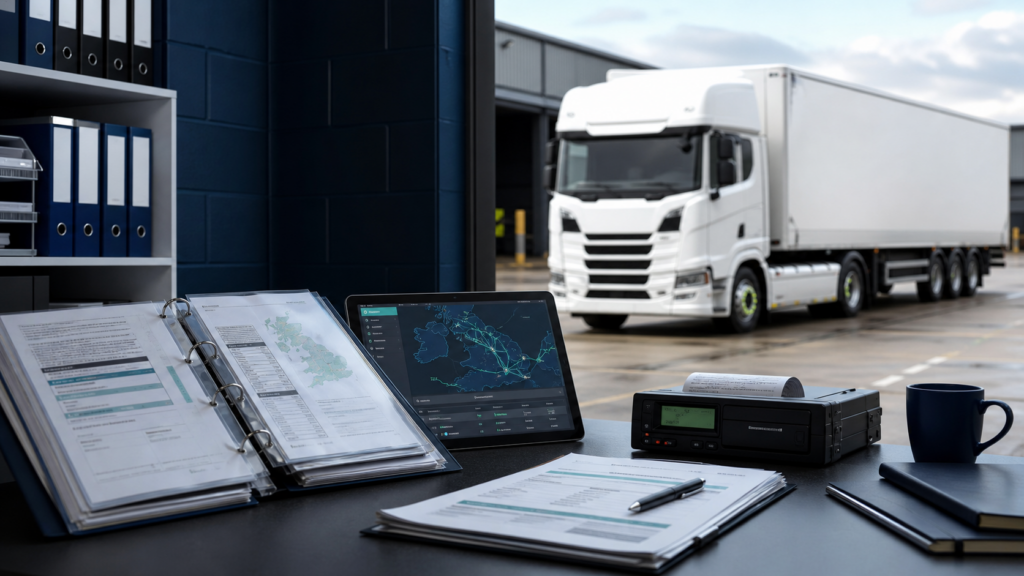
A Standard International Transport Manager provides professional competence for an operator that needs standard international authority. For goods operators, that can include international haulage, qualifying van work in Europe for hire or reward and the systems needed to keep vehicles, drivers and journey records compliant.
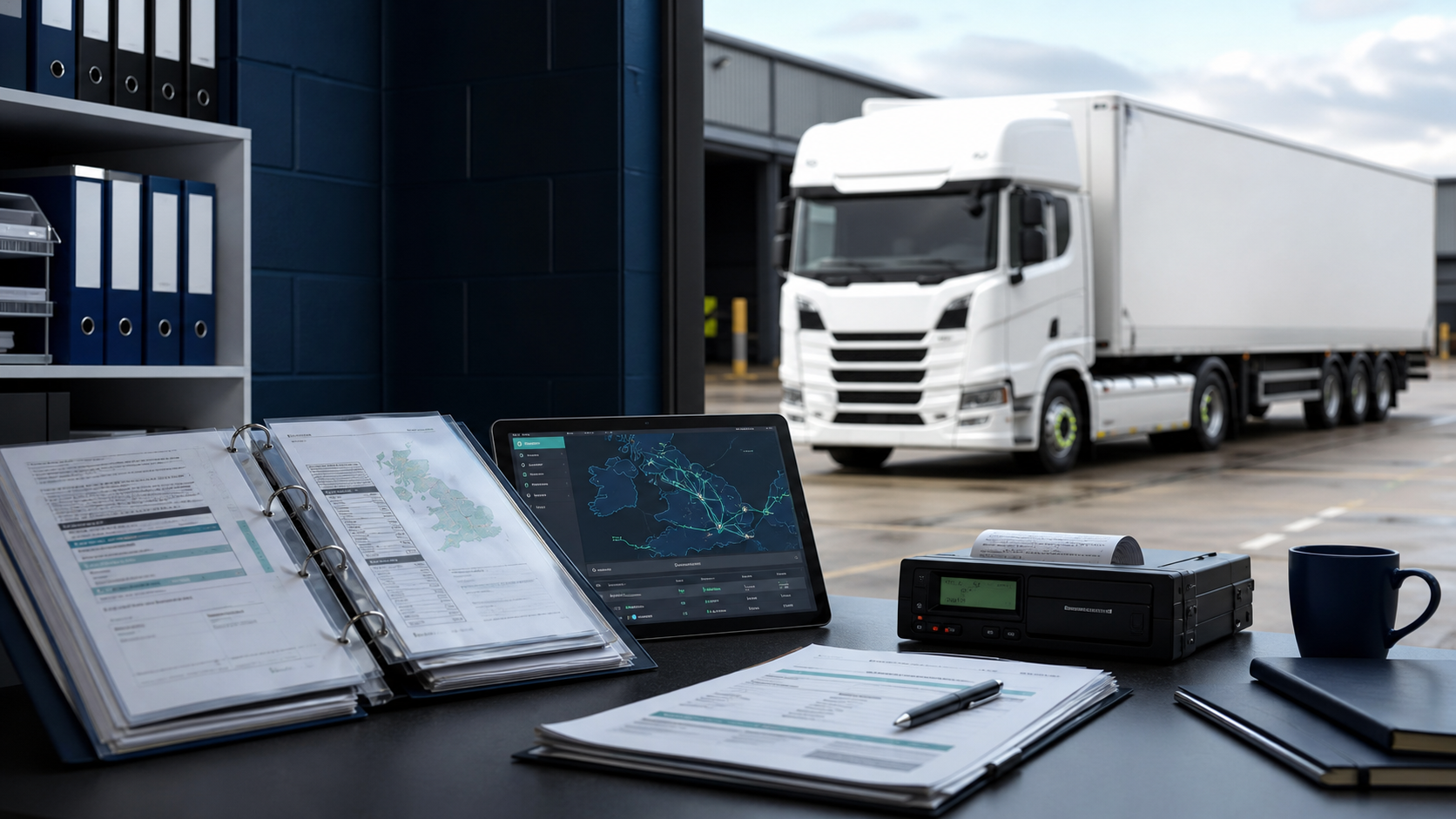
When a standard international transport manager is needed
A standard licence holder needs professional competence. Where the operator carries goods internationally for hire or reward, the competence and licence scope must support international operations. The transport manager must understand the work being done, not just the domestic record system.
| Operator situation | Transport manager issue | Evidence to check |
|---|---|---|
| Applying for standard international authority | Professional competence must cover international operations | CPC certificate, experience and proposed hours |
| Upgrading from standard national | The existing transport manager may not have international scope | CPC type, licence variation evidence and journey plan |
| Using vans or car-and-trailer combinations in Europe for hire or reward | Relevant vehicles or combinations over 2.5 tonnes may require standard international authority and a transport manager | Vehicle weight, hire-or-reward position and journeys to the EU, Iceland, Liechtenstein, Norway or Switzerland |
| Adding trailers or higher utilisation | Maintenance and roadworthiness controls may need strengthening | Trailer list, PMIs, brake tests, defects and MOT planning |
| Taking on new international contracts | Drivers’ hours, documents and route planning need review | Tachograph controls, driver eligibility and journey documents |
Standard national versus standard international
The difference is not just a label. Standard international authority changes what work the operator can do and what competence the transport manager must bring. GOV.UK guidance explains that a person can be professionally competent for national operations only or for both national and international operations.
| Point | Standard national | Standard international |
|---|---|---|
| Authority | Own goods in the UK and internationally, and other people’s goods in the UK | Own goods and other people’s goods in the UK and on international journeys |
| CPC scope | National competence may be enough | International competence should be evidenced |
| Documents | Domestic operator records | Domestic records plus international document control |
| Management pressure | Maintenance, drivers and operating centre control | All domestic controls plus cross-border planning |
International document control
The transport manager should know which documents vehicles and drivers need for the work. For goods operations this may include licence documentation, a UK Licence for the Community where required, vehicle registration documents, insurance, tachograph records, driver documents, trailer evidence and any route-specific requirements.
Driver and tachograph control
International haulage can make drivers’ hours management more demanding. The transport manager should check route plans, rest planning, tachograph downloads, infringements and corrective action. A good record shows decisions were made before the journey, not after a problem occurred.
Vehicle and trailer roadworthiness
Longer journeys and cross-border work do not reduce UK operator-licence obligations. PMIs, brake testing, defect reporting, MOT planning and repair evidence remain central. Trailers should be controlled carefully where used, especially where they appear in international work.
Standard international risk points
The practical risk points are CPC scope, licence-upgrade evidence, international journey records, driver control and the difference between national and international authority. Those points should be checked before the operator accepts cross-border work, not after a vehicle is already committed.
Related pages
Useful internal reading includes international transport manager, international PSV transport manager, external transport manager rates and operator licence applications.
Evidence before upgrading to standard international
Before an upgrade, the operator should check whether the current systems are strong enough for international work. That means maintenance records are current, drivers’ hours controls are consistent, trailers are accounted for, vehicle documents are available and the proposed transport manager has enough time to manage the extra complexity.
The decision should not be made only because a new contract is available. If the records are weak before the upgrade, international work can make the weakness more visible and harder to defend.
Official sources: GOV.UK goods vehicle operator licensing guide, GOV.UK goods vehicle licence types, GOV.UK transporting goods in Europe in vans or car and trailers and GOV.UK UK Licence for the Community.
Request transport compliance quotes
Discuss the work, experience and support your operation needs with independent providers. Request quotes with no obligation.
Get quotes now →